
Quick answer
My highest-conviction setup. Higher-timeframe PD array + SMT divergence between NQ and ES + 1-minute inversion entry. When all three line up, it is about as high-probability as a discretionary setup gets for me.
Introduction
This is the setup I get asked about more than any other. People want to know my go-to. This is it. The Holy Grail Inversion Fair Value Gap setup. The one I'd take a thousand times out of a thousand if the conditions are there.
It's a continuation model. You don't have to catch the bottom or the top. You let the higher timeframe do the heavy lifting, wait for a specific divergence between two correlated assets (NQ and ES), and then enter on a clean lower-timeframe trigger.
This is the Holy Grail inversion setup for me. It is the highest-probability trade I take. I'm not going to pretend anything is a sure thing (nothing is), but when the full sequence prints, this is as close as I get.
Kevin Dhesi · @dhesi_trades
What Is a Fair Value Gap?
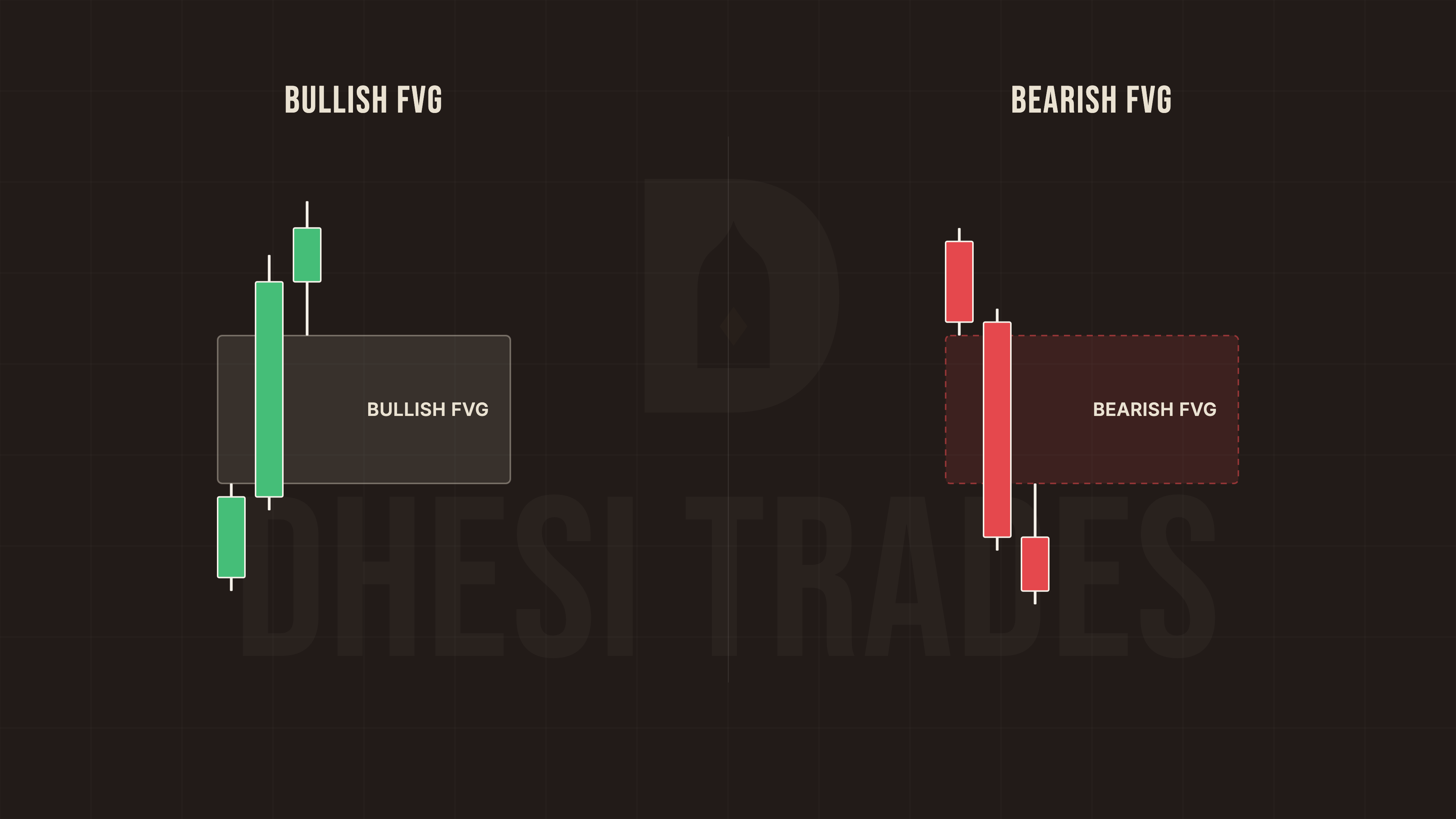
Before we get to the inversion, you need to understand the standard Fair Value Gap (FVG). A Fair Value Gap is a three-candle pattern where the wick of the first candle and the wick of the third candle leave an unfilled price range. The body of the middle candle "skipped" that zone.
The market hates inefficient delivery. Most of the time, price will eventually return to fill that gap. That's why the FVG acts as a magnet, and a high-probability area of interest.
 Dhesi Trades
What Is an Inversion Fair Value Gap?
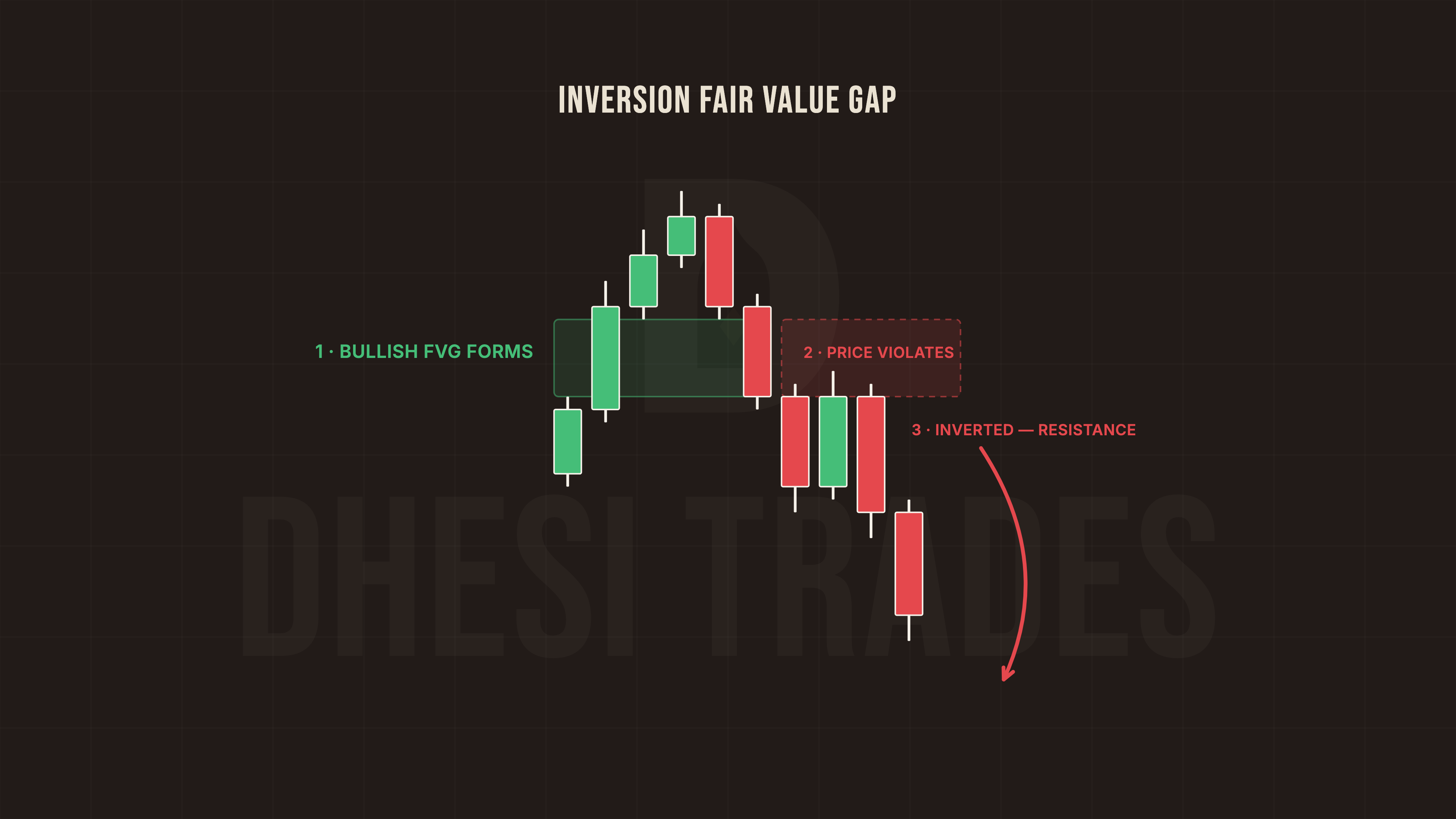
An Inversion Fair Value Gap is what happens after price violates a normal FVG. Once price closes through and inverts the gap, the FVG flips polarity. A bullish FVG that gets violated becomes bearish resistance on the retest, and vice versa.
That retest of the inverted gap is the trigger. It's not random support or resistance. It's a structural area where smart money has already shown intent.
 Dhesi Trades
What are the three confluences that make this the Holy Grail IFVG?
An IFVG on its own is a decent setup. The Holy Grail version stacks three things on top of it. When all three line up, the win rate is at its highest.
1. Higher Timeframe PD Array
The trade must align with a larger area of interest. Typically a daily Fair Value Gap, an hourly inversion, or a previous session high/low. The higher timeframe is the gravity. Without it, you're trading noise.
2. Bullish or Bearish SMT Divergence
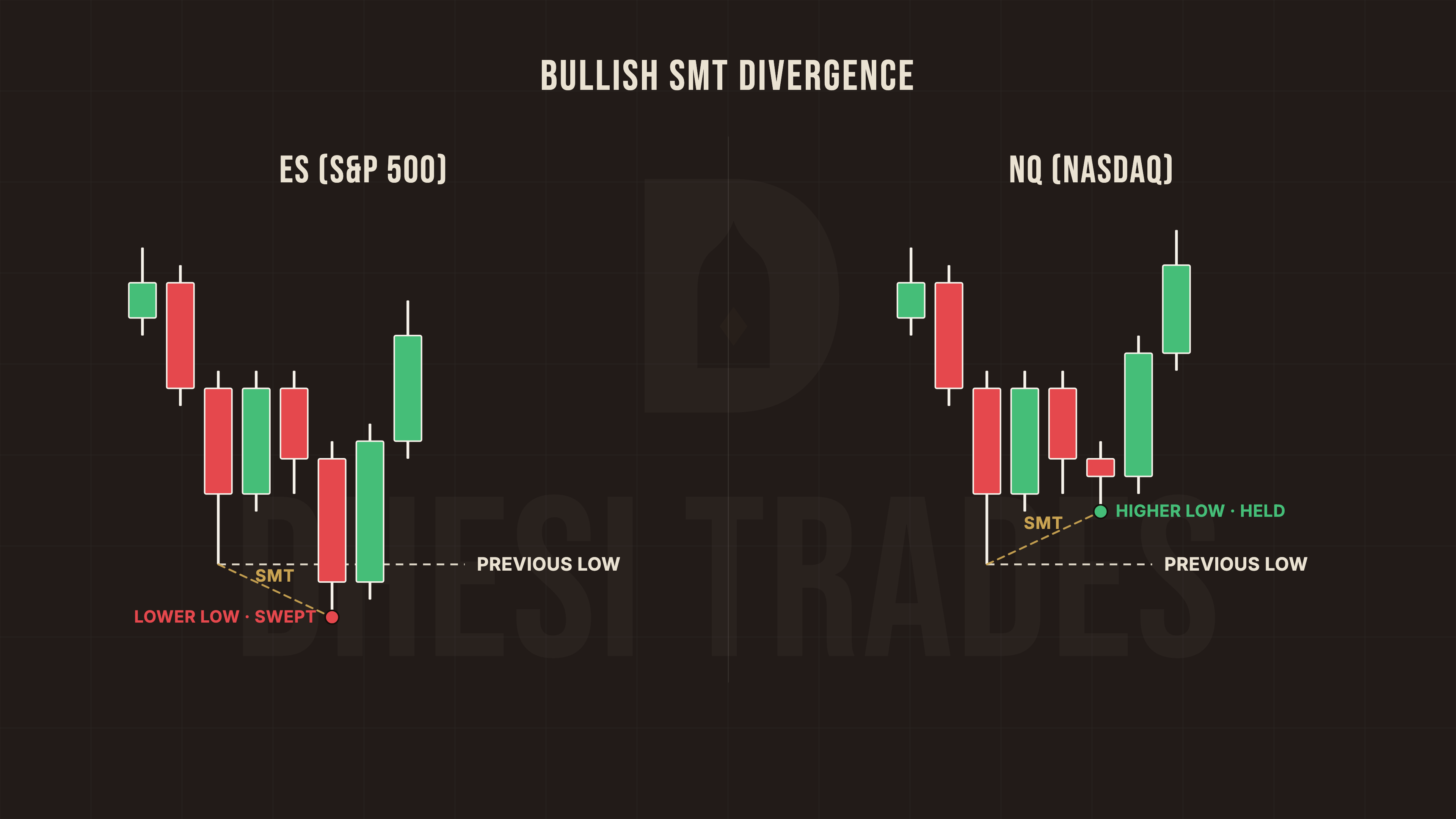
SMT (Smart Money Technique) is the divergence between two correlated assets. NQ and ES move together almost all the time. When one of them sweeps a low or high and the other doesn't, that's the tell. One asset is being manipulated for liquidity. The other is showing the real direction.
 Dhesi Trades
3. Lower Timeframe Inversion
With the higher timeframe in your favor and SMT confirmed, you drop down to the 5-minute or 1-minute and wait for the actual IFVG to violate and retest. That is your entry trigger. Not before.
How do I stack the three confluences into one trade?
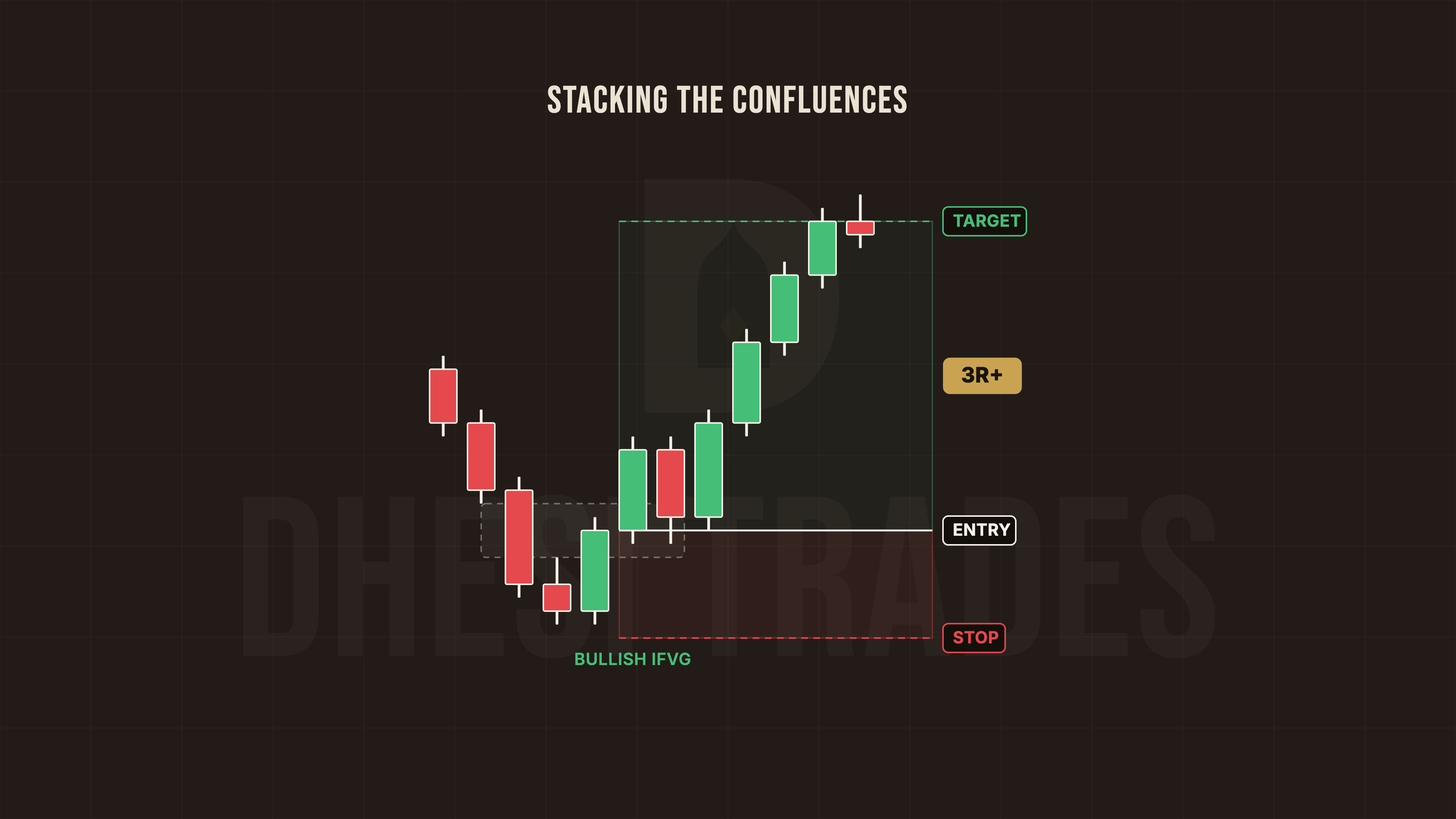
Put it all together and the setup looks like this:
 Dhesi Trades
What rules do I actually trade by for the Holy Grail IFVG?
- Wait for the open. I don't take this trade in the first 15 to 30 minutes. Too early, too noisy.
- Identify your higher timeframe PD array first. Daily FVG, hourly inversion, previous session high/low. No HTF zone, no trade.
- Confirm SMT divergence between NQ and ES. One sweeps, the other doesn't. If both move in lockstep, skip it.
- Drop to the 5-minute for the IFVG zone. Mark it.
- Drop to the 1-minute for the violation and retest. Enter on the retest, not before.
- Stop goes just beyond the IFVG invalidation. Tight, defined.
- Target #1: internal liquidity (equal highs/lows). Trim there.
- Target #2: session high or low. These act like magnets. Hold runners.
When should I skip the Holy Grail IFVG?
Just as important as knowing when to pull the trigger is knowing when to not. Skip the setup when:
- No SMT divergence. If both indices move together, smart money isn't differentiating. Wait.
- No higher timeframe context. A 1-minute IFVG without HTF backing is just noise. You'll get chopped.
- Pre-market or first 15 min. Too thin, too erratic. Wait for the real session.
- Major news inside 30 min. CPI, FOMC, NFP. Let them clear before you swing.
- Already past your daily two-loss limit. The setup will print again tomorrow. Your discipline won't.
What's the bottom line on the Holy Grail IFVG?
This setup is the closest thing to a "go-to" I have. Higher timeframe gravity. SMT divergence as the tell. Lower-timeframe inversion as the trigger. Three confluences, stacked, on assets that are tightly correlated. That's where the edge lives.
Don't try to take it on a 5-minute chop day. Don't take it without the higher timeframe in your favor. And don't blow your two-loss rule trying to force it. The setup will be there tomorrow.
If you want this setup drilled into your reps, come watch it run in real time. The live stream is free, every weekday morning.
When we have a higher timeframe PD array, when we have an SMT forming, when we have our lower-timeframe inversions, this right here is my favorite all-time setup. I'm always going to take this. Always.
Kevin Dhesi