
Quick answer
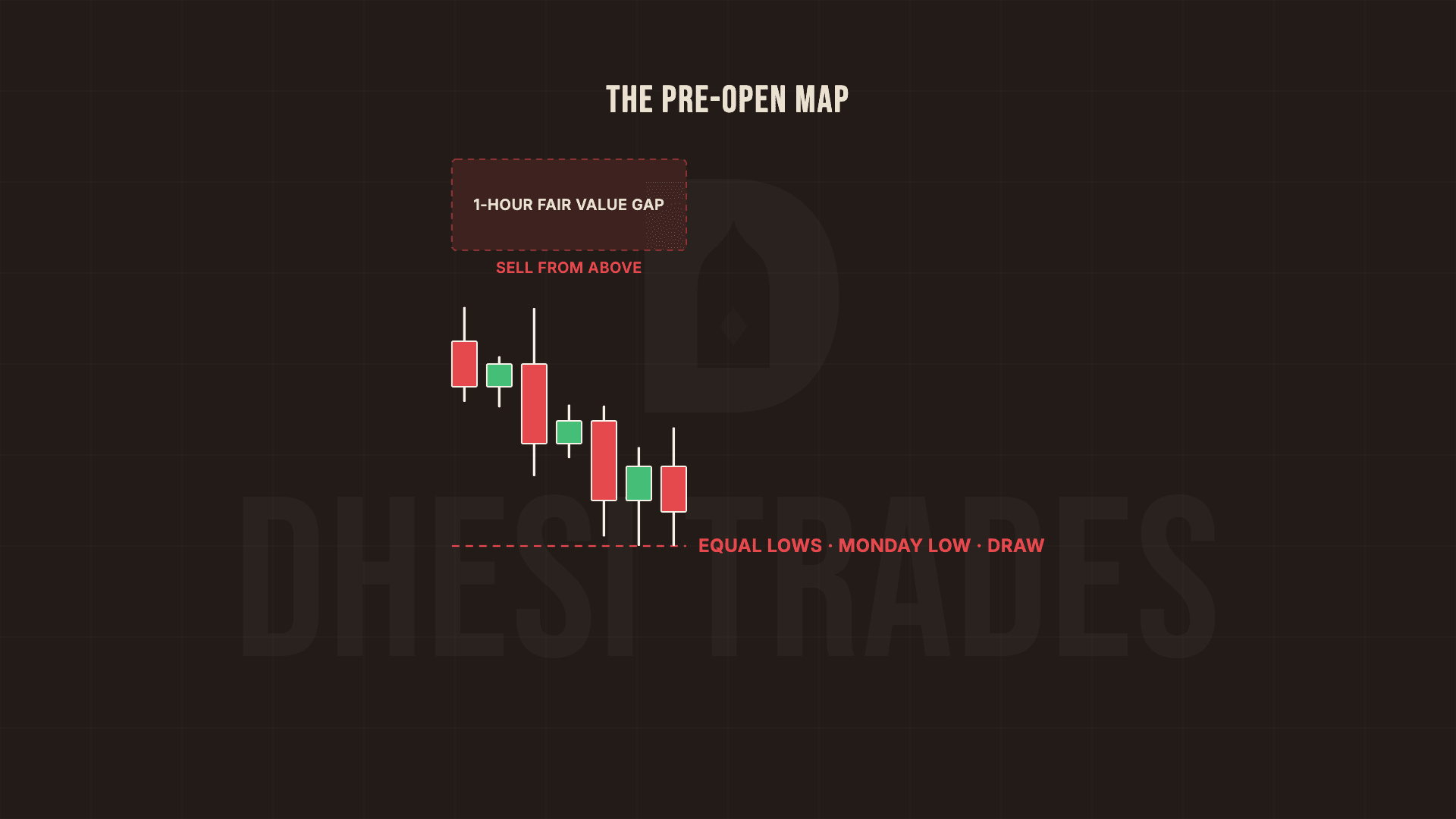
Before the bell rings I already know my plan. Overnight left a bearish 1-hour fair value gap above and a stack of sellside below: equal lows sitting right on top of the Monday low. That is the whole map. If the New York open pumps into the 1-hour gap, I look for the rejection and a change in the state of delivery, then I short toward the lows with my stop above the New York high. The plan is built before the open, so the entry is just execution.
Introduction
Most people show up at 9:30 and react. The candles start moving, cortisol spikes, and they chase whatever printed last. I do the opposite. I break down the New York open before it happens, as a set of if-then statements. If price taps this level, then I look for that reaction. Nothing else. Here is the exact walkthrough from the session.
“Going into the market you should be thinking: we have sellside, we have an hourly gap. If we tap the 1-hour gap, then I can look for a rejection.
”Kevin Dhesi · @dhesi_trades
Step one: map the draw before the open
The first question is always the same. Where is the most high-probability pool of liquidity the market can draw to?
- Below: the Monday low, which is also the current week low. Stacked on top of it, equal lows. Equal lows that everyone can see are low-resistance liquidity, a clean run waiting to happen.
- Above: the 1-hour fair value gap left from overnight, already showing rejection. That gap is the premium array price can tap into before delivering to the sellside.
Two reference points. One above to sell from, one below to deliver into. That is the entire pre-market map.
The Pre-Open Map
 Dhesi Trades
Step two: write the if-then before 9:30
The plan is one sentence. If the open pumps into the 1-hour gap, then I look for a rejection and hunt the short toward the lows. No prediction. No opinion about where the market must go. A condition and a response, decided while the market is still quiet.
If the condition never triggers, there is no trade. That is a complete outcome too.
Step three: the open, the tap, the trigger
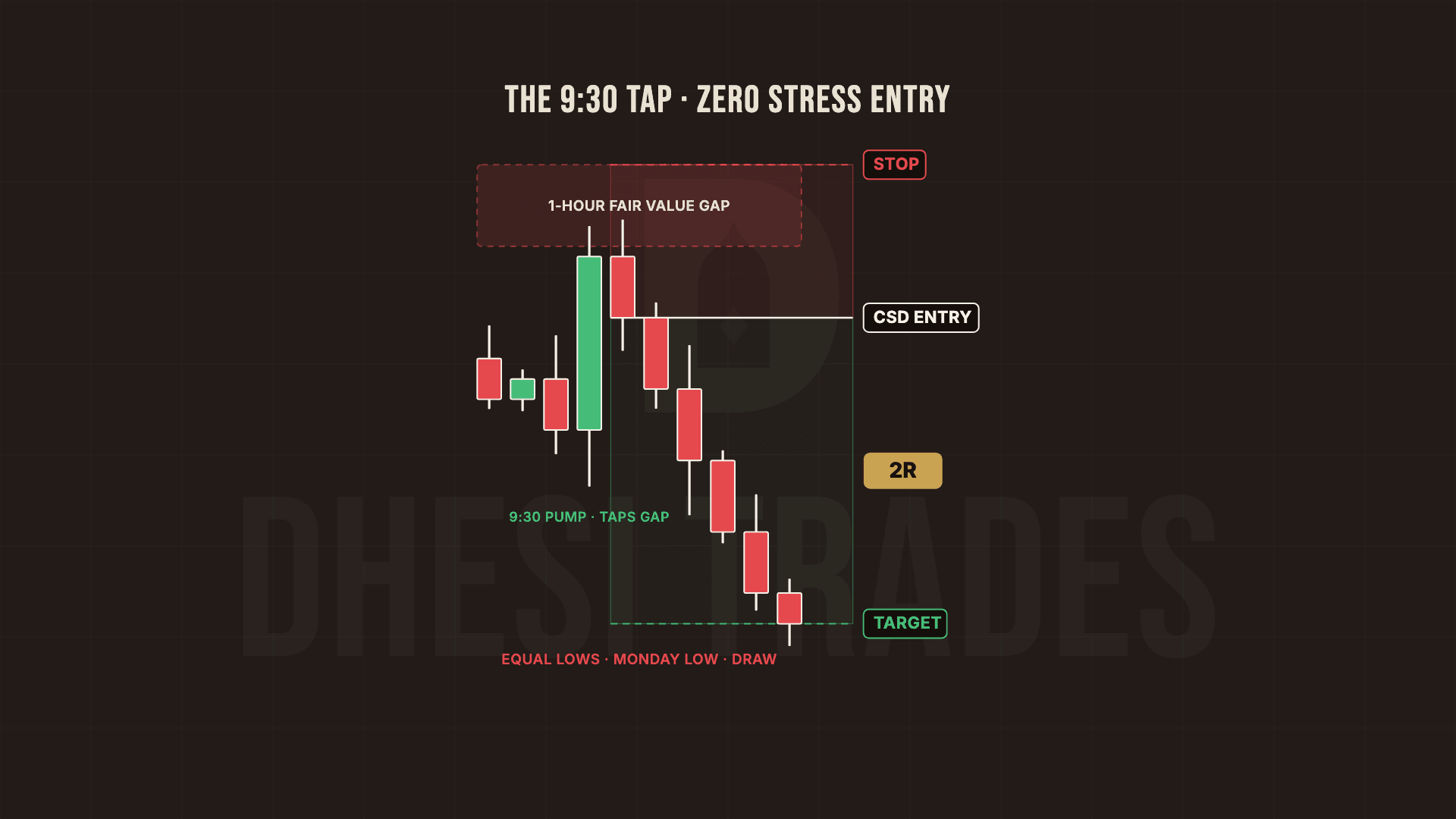
The market opens and prints a pump candle straight up. That candle is doing two jobs at once: it is tapping into the hourly fair value gap, and it is leaving the equal lows and Monday low untouched below. Everything from the pre-open map is now live.
The entry trigger is the change in the state of delivery. Price stops delivering higher, breaks the candle structure, and starts delivering lower. That shift, right off the open, inside the 1-hour gap, above stacked sellside, is the confirmation.
“Change in the state of delivery off the New York open, the 1-hour fair value gap, equal lows, Monday lows. Short position right here.
”Kevin Dhesi · @dhesi_trades
The 9:30 Tap. Zero Stress Entry
 Dhesi Trades
The stop and the invalidation
My stop goes above the New York high. Not a random tick count, the level that proves the idea wrong. If price reclaims the open and holds back above that high, the rejection failed, the setup drops to low probability, and the market is likely to continue higher. I am out, no negotiation.
- Before 9:30, mark the overnight 1-hour fair value gap above.
- Mark the sellside draw below: equal lows, Monday low, the current week low.
- Write the if-then: if the open taps the gap, then hunt the rejection.
- Let the 9:30 candle do its job. No entry on the pump itself.
- Wait for the change in the state of delivery. That flip is the trigger.
- Stop goes above the New York high. A reclaim kills the setup.
- Target the equal lows and the Monday low. Let the draw do the work.
When the setup is not there
- No gap above, no draw below. If the overnight session left no clean map, there is no if-then to write. Skip the open.
- The pump never taps the gap. Condition not met, no trade. Waiting is a position.
- No change in the state of delivery. A tap without the flip is just a rally. Do not fade strength on hope.
- Price reclaims the New York high. The setup is invalid. Continuation is now the higher-probability read.
Bottom line
The open is only stressful when you walk in without a plan. Map the hourly gap, map the lows, write the if-then, and the 9:30 chaos turns into a checklist. The pump candle taps the gap, the state of delivery flips, the stop lives above the New York high, and the trade delivers toward the lows that were marked an hour before the bell.
“This is one entry you can get triggered in. A low cortisol trade. This is how you need to break down the New York open.
”Kevin Dhesi · @dhesi_trades
The pre-open breakdown runs live on the stream every weekday morning. The bias work that feeds it starts with how I find daily bias, and the sweep-to-inversion version of the same idea lives in the simple day trading setup.
Quick check
Three questions, straight from this article. See if it stuck.
0 of 3 answered