
Quick answer
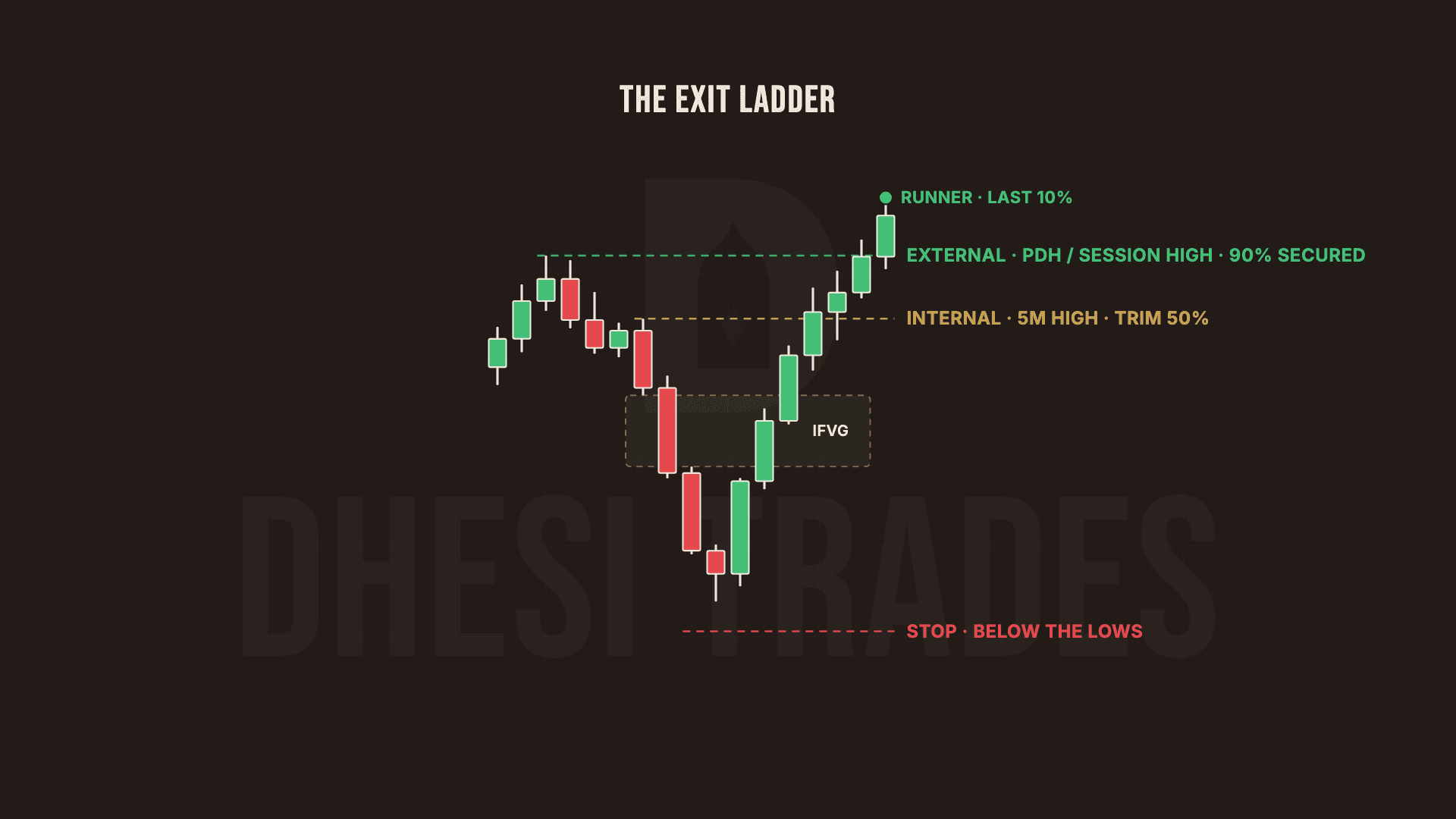
My exits are mapped before the entry, in two layers. The internal target: any high inside the PD array I am trading toward, like a 5-minute high sitting within an order block. That is the first take-profit, and I trim 50% of the position there. The external target: session highs or lows, the previous day high or low, or any unmitigated higher-timeframe PD array. When external liquidity gets taken, 90% of the position is secured, and the last 10% stays on as a runner. Gains locked at both layers, downside protected the whole way.
Introduction
Everyone obsesses over entries. The exit is where the money actually changes hands, and winging it in the moment is how a winning trade round-trips back to breakeven. This is the whole system: two layers of liquidity, three scales, no decisions left for mid-trade.
Layer one: the internal target
Internal liquidity is the buyside or sellside sitting INSIDE the range you are trading, on the way to the bigger draw. The marker I use: any high within a PD array. In this example, a 5-minute high inside an order block.
That is the first take-profit. When price reaches it, I trim 50% of the position. Half the trade is now banked against whatever happens next, and the stop math on the remainder gets very forgiving.
Layer two: the external target
External liquidity is the range's outer edge, the levels everyone can see:
- Session highs or session lows
- The previous day high or previous day low
- Any unmitigated higher-timeframe PD array overhead or below
“Once external liquidity is taken out, 90% of my position has been secured. I leave 10% for runners.
”Kevin Dhesi · @dhesi_trades
When the external pool gets swept, I am up to 90% secured. The last 10% is the runner: a free look at the outsized continuation, financed entirely by profits already taken.
The Exit Ladder
 Dhesi Trades
Why the ladder beats the all-or-nothing exit
Hold everything for the moonshot target and one rejection erases the whole trade. Dump everything at the first high and the runner days, the ones that pay for the month, never happen. The ladder takes both mistakes off the table:
- The 50% trim pays the trade early and buys patience for the rest.
- The 90% secure at external liquidity locks the meat of the move where the market was actually aiming.
- The 10% runner keeps a claim on the day the move just keeps going, at zero emotional cost.
And because every level is a liquidity landmark mapped before entry, there is nothing to decide mid-trade. The plan executes itself.
- Before entry, mark the internal target: a high inside the PD array in your path (a 5-minute high within the order block).
- Mark the external target: session high/low, previous day high/low, or an unmitigated higher-timeframe PD array.
- At the internal target, trim 50%. No exceptions, no "it looks strong."
- When external liquidity is taken, be 90% secured.
- Leave 10% as the runner. It either pays big or costs nothing that was not already banked.
- The stop moves as structure builds. Protecting the downside is the whole point of the ladder.
When the ladder says stand down
- No internal target in the path. If the first high worth trimming at is basically your entry, the trade has no room. Skip it.
- External liquidity already swept. The draw is spent; whatever is left is somebody else's trade.
- You keep overriding the trims. If "letting it ride" replaces the ladder, the exits are mood-driven again, and the loss spiral is one bad day away.
Bottom line
Exits are a map, not a feeling. Internal liquidity pays the first half, external liquidity locks ninety percent, and the runner keeps the upside open. Every level is chosen before the trade exists, so the only job mid-trade is following the ladder. Secure gains at both layers of liquidity, protect the downside, repeat.
Where those targets come from starts with the draw: the New York open playbook and the reversal model both end at exactly these pools. Watch the ladder run live on the stream every weekday morning.
Quick check
Three questions, straight from this article. See if it stuck.
0 of 3 answered